Buy maglieria.eu ?
We are moving the project
maglieria.eu .
Are you interested in purchasing the domain
maglieria.eu ?
domain@kv-gmbh.de · 0541-91531010
Buy maglieria.eu ?
Is the word Chef or Direktor a loanword?
The word "Chef" is a loanword, as it comes from the French language where it means "chief" or "boss." It has been borrowed into English to refer to the head cook or executive chef in a kitchen. On the other hand, "Direktor" is not a loanword, as it is a German word that means "director" or "manager." Loanwords are words borrowed from another language and incorporated into the vocabulary of another language, while "Direktor" is a native German word. **
What is the difference between loanword and loan meaning?
A loanword is a word taken from one language and used in another language with little to no translation, while a loan meaning is when a word in one language adopts a new meaning from another language. Loanwords retain their original form, while loan meanings involve a shift in the meaning of a word. Both loanwords and loan meanings contribute to the enrichment and evolution of languages through cultural exchange and borrowing. **


Similar search terms for Loanword
Top-Angebote
Products related to Loanword:
-
GlowBake Autumn Winter Women Sweater, Fashion Warm Bottoming Shirts, Half High Collar Knitwear Solid Long Sleeve Pullovers black xlDiscover the perfect layer this season with our premium Autumn Winter Women Sweater, designed to combine comfort and style in one smart piece. Crafted with a soft, breathable knit fabric, this sweater delivers on both warmth and versatility. Whether...29,97 $*Shipping: 0,00 $Secure redirect to the provider
-
Multisell Products Hub Aesthetic Grunge Babydoll Knitted Sweater, Cottage Milkmaid Pullovers, Knitwear T shirts For Women type 4 lCharming and Comfortable Style: Add a touch of cozy elegance to your wardrobe with this Babydoll Knitted Sweater Top. Designed for the modern woman, this Cottage Milkmaid Pullover blends delicate femininity with a unique Aesthetic Grunge vibe....49,97 $*Shipping: 0,00 $Secure redirect to the provider
-
GlowBake Autumn Winter Women Sweater, Fashion Warm Bottoming Shirts, Half High Collar Knitwear Solid Long Sleeve Pullovers red mDiscover the perfect layer this season with our premium Autumn Winter Women Sweater, designed to combine comfort and style in one smart piece. Crafted with a soft, breathable knit fabric, this sweater delivers on both warmth and versatility. Whether...29,97 $*Shipping: 0,00 $Secure redirect to the provider
-
GlowBake Autumn Winter Women Sweater, Fashion Warm Bottoming Shirts, Half High Collar Knitwear Solid Long Sleeve Pullovers beige mDiscover the perfect layer this season with our premium Autumn Winter Women Sweater, designed to combine comfort and style in one smart piece. Crafted with a soft, breathable knit fabric, this sweater delivers on both warmth and versatility. Whether...29,97 $*Shipping: 0,00 $Secure redirect to the provider




-
What is a loanword and what is a long vowel?
A loanword is a word adopted from one language and incorporated into another language without translation. Loanwords often retain their original spelling and pronunciation. On the other hand, a long vowel is a vowel sound that is pronounced for an extended period of time compared to a short vowel. In English, long vowels are typically represented by a single vowel letter followed by a silent 'e' at the end of a word, such as in the word "cake." **
-
What is the difference between a loanword and a technical term?
A loanword is a word that has been borrowed from one language and incorporated into another language, often with some adaptation to fit the phonological and morphological patterns of the borrowing language. Loanwords often retain their original meaning and may be used in a variety of contexts. On the other hand, a technical term is a word or phrase that has a specific meaning within a particular field or discipline, such as science, technology, or medicine. Technical terms are often used to convey precise and specialized information within a specific context, and may not be widely understood outside of that context. While loanwords can come from any language and be used in a variety of contexts, technical terms are specific to certain fields and are used to convey specialized meanings within those fields. **
-
What is the difference between a foreign word and a loanword?
A foreign word is a word that comes from another language and is used in its original form without any adaptation or integration into the receiving language. A loanword, on the other hand, is a word that has been borrowed from another language and has been integrated into the receiving language, often with some modifications to fit the phonological, morphological, or syntactic patterns of the receiving language. In other words, a loanword is a foreign word that has been assimilated into the vocabulary of the receiving language. **
-
Does the word "Delusion" exist as a German loanword or only "Illusion"?
The word "Delusion" does exist as a German loanword, but it is not as commonly used as "Illusion." "Delusion" in German is "Täuschung," which can also be translated as "deception" or "misconception." While "Illusion" is more commonly used in both English and German, "Delusion" is still recognized as a loanword in the German language. **

What is the difference between a loanword, a foreign word, and a native word?
A loanword is a word taken from one language and used in another language with little to no translation. A foreign word is a word that originates from a different language but has been fully integrated into the vocabulary of the borrowing language. A native word is a word that is original to and commonly used in the language in which it is spoken. The key difference lies in the origin and level of integration of these words into the borrowing language. **
Does the Duden indicate whether a word is colloquial or a loanword or technical term?
Yes, the Duden does indicate whether a word is colloquial, a loanword, or a technical term. Each entry in the Duden dictionary includes information about the word's usage, including whether it is considered colloquial (informal language used in everyday conversation), a loanword (borrowed from another language), or a technical term (specific to a particular field or profession). This information helps users understand the context in which the word is typically used. **
Top-Angebote
Products related to Loanword:
-
David & Charles Colorful Crochet Knitwear : Crochet sweaters and more with mosaic, intarsia and tapestry crochet patternsCrochet bright and beautiful clothes and accessories with this guide to the most exciting crochet colorwork techniques including intarsia, mosaic and tapestry crochet. Why should knitters have all the fun when it comes to colourwork? If you prefer using one hook to two needles but wish you could crochet colourful garments like knitters then this collection of colourful crochet clothing is for you. Whether it's a sweater with a decorative yoke or a matching beanie and glove set in a Scandinavian-inspired design, this collection of crochet patterns shows that it's not just knitters who can make colorwork sweaters and accessories - crochet can be just as versatile once you know the techniques.Author, Sandra Gutierrez, explains how to use tapestry crochet and its variations to create fairisle crochet patterns on garments and accessories. Other colorwork techniques included are standard mosaic crochet, worked flat and in the round; single row mosaic crochet worked in the round to create texture; intarsia crochet which lends itself to more graphic images; and how to use stripes and color blocking as an accent on a shawl and sweater. There are step-by-step instructions and photography explaining all the different crochet colorwork techniques with detailed instructions about how to change colour, carrying floats and the importance of swatching and gauge.There are also general techniques about how to choose colors, how different yarns create different effects and how to substitute yarn. The collection also includes a number of garment construction techniques so you can build your crochet clothing skills as well as learning the colorwork techniques. Some of the techniques included are: top down construction; how to stitch a circular yoke; shaping raglan sleeves; vertical construction; shaping with short rows and how to make faux I-cords.10,99 £*Shipping: 2,99 £Secure redirect to the provider
-
Multisell Products Hub Aesthetic Grunge Babydoll Knitted Sweater, Cottage Milkmaid Pullovers, Knitwear T shirts For Women type 2 sCharming and Comfortable Style: Add a touch of cozy elegance to your wardrobe with this Babydoll Knitted Sweater Top. Designed for the modern woman, this Cottage Milkmaid Pullover blends delicate femininity with a unique Aesthetic Grunge vibe....49,97 $*Shipping: 0,00 $Secure redirect to the provider
-
GlowBake Autumn Winter Women Sweater, Fashion Warm Bottoming Shirts, Half High Collar Knitwear Solid Long Sleeve Pullovers black xlDiscover the perfect layer this season with our premium Autumn Winter Women Sweater, designed to combine comfort and style in one smart piece. Crafted with a soft, breathable knit fabric, this sweater delivers on both warmth and versatility. Whether...29,97 $*Shipping: 0,00 $Secure redirect to the provider
-
Multisell Products Hub Aesthetic Grunge Babydoll Knitted Sweater, Cottage Milkmaid Pullovers, Knitwear T shirts For Women type 4 lCharming and Comfortable Style: Add a touch of cozy elegance to your wardrobe with this Babydoll Knitted Sweater Top. Designed for the modern woman, this Cottage Milkmaid Pullover blends delicate femininity with a unique Aesthetic Grunge vibe....49,97 $*Shipping: 0,00 $Secure redirect to the provider
-
Is the word Chef or Direktor a loanword?
The word "Chef" is a loanword, as it comes from the French language where it means "chief" or "boss." It has been borrowed into English to refer to the head cook or executive chef in a kitchen. On the other hand, "Direktor" is not a loanword, as it is a German word that means "director" or "manager." Loanwords are words borrowed from another language and incorporated into the vocabulary of another language, while "Direktor" is a native German word. **
-
What is the difference between loanword and loan meaning?
A loanword is a word taken from one language and used in another language with little to no translation, while a loan meaning is when a word in one language adopts a new meaning from another language. Loanwords retain their original form, while loan meanings involve a shift in the meaning of a word. Both loanwords and loan meanings contribute to the enrichment and evolution of languages through cultural exchange and borrowing. **
-
What is a loanword and what is a long vowel?
A loanword is a word adopted from one language and incorporated into another language without translation. Loanwords often retain their original spelling and pronunciation. On the other hand, a long vowel is a vowel sound that is pronounced for an extended period of time compared to a short vowel. In English, long vowels are typically represented by a single vowel letter followed by a silent 'e' at the end of a word, such as in the word "cake." **
-
What is the difference between a loanword and a technical term?
A loanword is a word that has been borrowed from one language and incorporated into another language, often with some adaptation to fit the phonological and morphological patterns of the borrowing language. Loanwords often retain their original meaning and may be used in a variety of contexts. On the other hand, a technical term is a word or phrase that has a specific meaning within a particular field or discipline, such as science, technology, or medicine. Technical terms are often used to convey precise and specialized information within a specific context, and may not be widely understood outside of that context. While loanwords can come from any language and be used in a variety of contexts, technical terms are specific to certain fields and are used to convey specialized meanings within those fields. **
Similar search terms for Loanword
-
GlowBake Autumn Winter Women Sweater, Fashion Warm Bottoming Shirts, Half High Collar Knitwear Solid Long Sleeve Pullovers red mDiscover the perfect layer this season with our premium Autumn Winter Women Sweater, designed to combine comfort and style in one smart piece. Crafted with a soft, breathable knit fabric, this sweater delivers on both warmth and versatility. Whether...29,97 $*Shipping: 0,00 $Secure redirect to the provider
-
GlowBake Autumn Winter Women Sweater, Fashion Warm Bottoming Shirts, Half High Collar Knitwear Solid Long Sleeve Pullovers beige mDiscover the perfect layer this season with our premium Autumn Winter Women Sweater, designed to combine comfort and style in one smart piece. Crafted with a soft, breathable knit fabric, this sweater delivers on both warmth and versatility. Whether...29,97 $*Shipping: 0,00 $Secure redirect to the provider
-
GlowBake Autumn Winter Women Sweater, Fashion Warm Bottoming Shirts, Half High Collar Knitwear Solid Long Sleeve Pullovers white xxlDiscover the perfect layer this season with our premium Autumn Winter Women Sweater, designed to combine comfort and style in one smart piece. Crafted with a soft, breathable knit fabric, this sweater delivers on both warmth and versatility. Whether...29,97 $*Shipping: 0,00 $Secure redirect to the provider
-
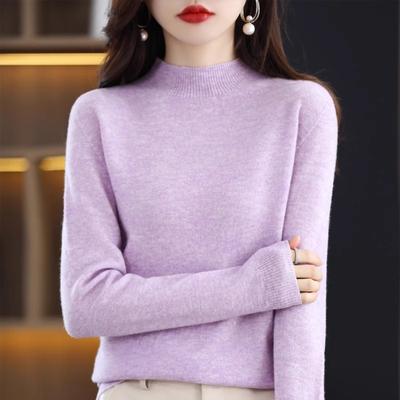
GlowBake Autumn Winter Women Sweater, Fashion Warm Bottoming Shirts, Half High Collar Knitwear Solid Long Sleeve Pullovers lavender mDiscover the perfect layer this season with our premium Autumn Winter Women Sweater, designed to combine comfort and style in one smart piece. Crafted with a soft, breathable knit fabric, this sweater delivers on both warmth and versatility. Whether...29,97 $*Shipping: 0,00 $Secure redirect to the provider
-
What is the difference between a foreign word and a loanword?
A foreign word is a word that comes from another language and is used in its original form without any adaptation or integration into the receiving language. A loanword, on the other hand, is a word that has been borrowed from another language and has been integrated into the receiving language, often with some modifications to fit the phonological, morphological, or syntactic patterns of the receiving language. In other words, a loanword is a foreign word that has been assimilated into the vocabulary of the receiving language. **
-
Does the word "Delusion" exist as a German loanword or only "Illusion"?
The word "Delusion" does exist as a German loanword, but it is not as commonly used as "Illusion." "Delusion" in German is "Täuschung," which can also be translated as "deception" or "misconception." While "Illusion" is more commonly used in both English and German, "Delusion" is still recognized as a loanword in the German language. **
-
What is the difference between a loanword, a foreign word, and a native word?
A loanword is a word taken from one language and used in another language with little to no translation. A foreign word is a word that originates from a different language but has been fully integrated into the vocabulary of the borrowing language. A native word is a word that is original to and commonly used in the language in which it is spoken. The key difference lies in the origin and level of integration of these words into the borrowing language. **
-
Does the Duden indicate whether a word is colloquial or a loanword or technical term?
Yes, the Duden does indicate whether a word is colloquial, a loanword, or a technical term. Each entry in the Duden dictionary includes information about the word's usage, including whether it is considered colloquial (informal language used in everyday conversation), a loanword (borrowed from another language), or a technical term (specific to a particular field or profession). This information helps users understand the context in which the word is typically used. **
* All prices are inclusive of VAT and, if applicable, plus shipping costs. The offer information is based on the details provided by the respective shop and is updated through automated processes. Real-time updates do not occur, so deviations can occur in individual cases. ** Note: Parts of this content were created by AI.